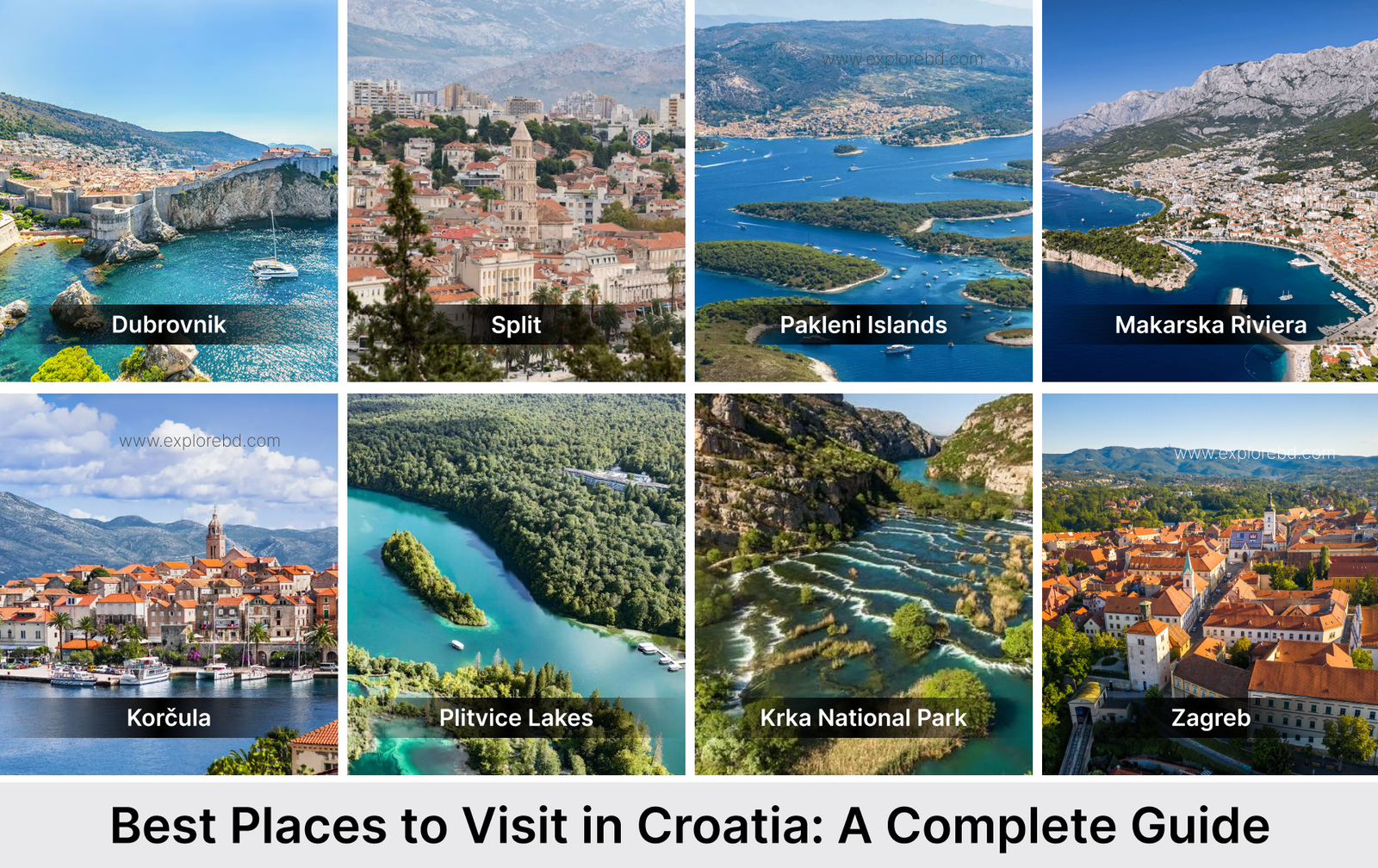
Croatia fits an unusual amount into a small country: a Roman emperor’s palace that people still live in, a walled medieval city above the sea, sixteen lakes linked by waterfalls, vineyards, truffle forests and more than a thousand islands. It is also one of the most popular summer destinations in Europe, which means the same place can feel magical in June and exhausting in August.
Most “best places” lists simply rank famous names. This guide does something more useful: it tells you what each place is actually good for, how many days it deserves, when to go, and how to combine places without wasting your trip on ferries and car parks.
Quick Picks: Where to Go in Croatia
- Best for a first trip: Dubrovnik, Split, one island and Plitvice Lakes
- Best for history: Split, Dubrovnik, Pula, Trogir
- Best for nature: Plitvice Lakes, Krka, Mljet
- Best for beaches and swimming: Brač, Hvar and the Pakleni Islands, Makarska Riviera, Mljet
- Best for food and wine: Istria, Pelješac peninsula, Kvarner, Zagreb
- Best for quieter travel: Korčula, Mljet, inland Istria, Zadar’s islands
- Best for nightlife: Hvar Town, Split
How to Choose: Think in Regions, Not Lists
Croatia is long and narrow, and travel between regions takes real time. Choosing too many places is the most common mistake. As a rule, plan no more than three bases on a 7 to 10 day trip, and use day trips for the rest.
- Dalmatia (south coast): Dubrovnik, Split, Hvar, Brač, Korčula, Mljet. The classic choice, with the best islands and the most crowds in July and August.
- Central and inland Croatia: Plitvice, Zagreb. Nature and city culture, best in spring and autumn.
- Istria and Kvarner (north coast): Rovinj, Pula, Opatija. Food, wine, Roman ruins and smaller crowds.
Dalmatia: Croatia’s Most Famous Coast
Dubrovnik: The Walled City (2 to 3 days)
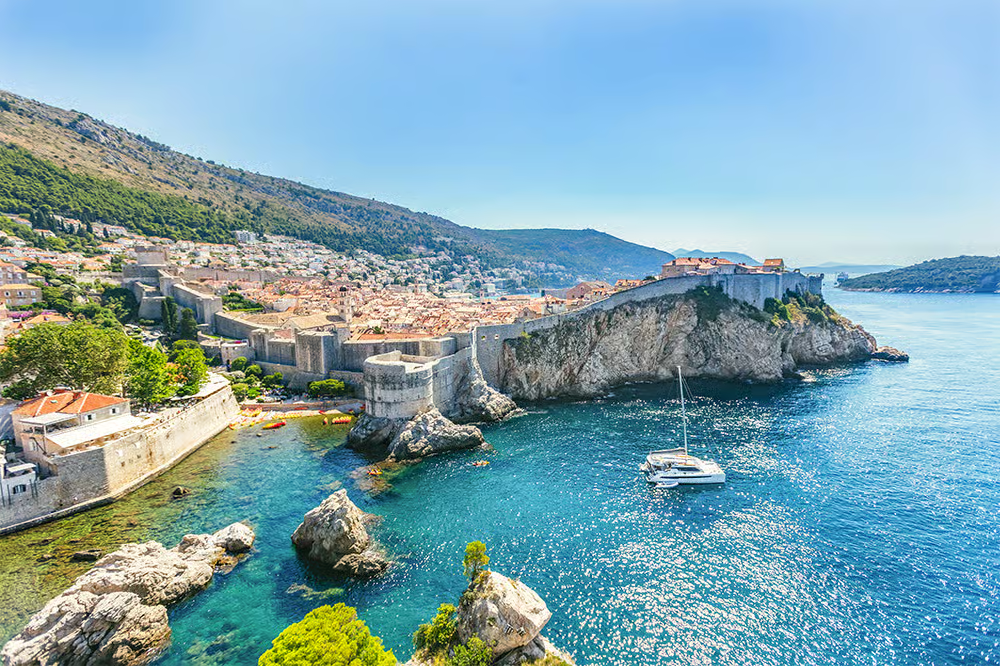
Dubrovnik’s old town, enclosed by limestone walls, is the image most people have of Croatia. Walking the full circuit of the walls takes roughly two hours and gives you views over terracotta roofs and the Adriatic. The trick is timing: go when the gates open or in the late afternoon, when the stone is cooler and the tour groups have thinned out.
The city has been limiting cruise-ship arrivals, but midday is still the busiest and hottest part of the day. For a calmer stay, sleep outside the walls or in nearby Cavtat, and visit the old town early. The Elaphiti Islands make an easy boat day trip, and the Pelješac bridge now allows you to drive north along the coast without crossing Bosnia and Herzegovina’s short coastal strip at Neum.
Best time: May, June, September and early October.
Split: The Best Base for First-Time Visitors (2 to 3 days)
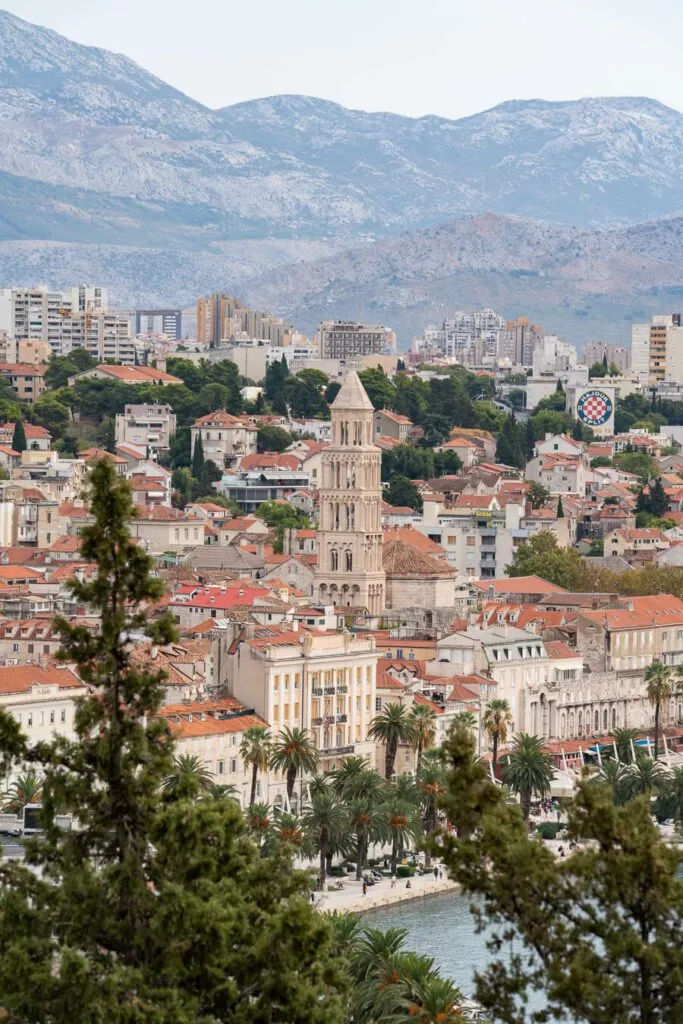
Diocletian’s Palace is not a museum behind glass. It is a Roman palace built around AD 305 whose walls, cellars and courtyards now hold cafés, shops and apartments. Walk the waterfront promenade, climb Marjan Hill for the view and spend an evening in the old town squares.
Split is also the main ferry and transport hub for central Dalmatia, which makes it the most practical base on the coast. From here you can reach Trogir (a UNESCO-listed island town), Krka National Park, Hvar, Brač and Šolta without changing hotels.
Hvar and the Pakleni Islands (2 to 3 days)
Hvar Town is the glamorous end of the island, with a fortress above the harbour, polished stone streets and a lively bar scene. If that is not your style, stay in Stari Grad, whose ancient agricultural plain is a UNESCO site, or in one of the quieter villages. Boats from Hvar Town reach the Pakleni Islands in minutes, where you can swim in clear bays and eat grilled fish at a beach restaurant.
Lavender blooms around June, which gives the island a scent and colour that most visitors miss in the main summer months.
Best time: June and September. In July and August book rooms and ferries well in advance.
Brač and the Makarska Riviera (2 to 3 days)
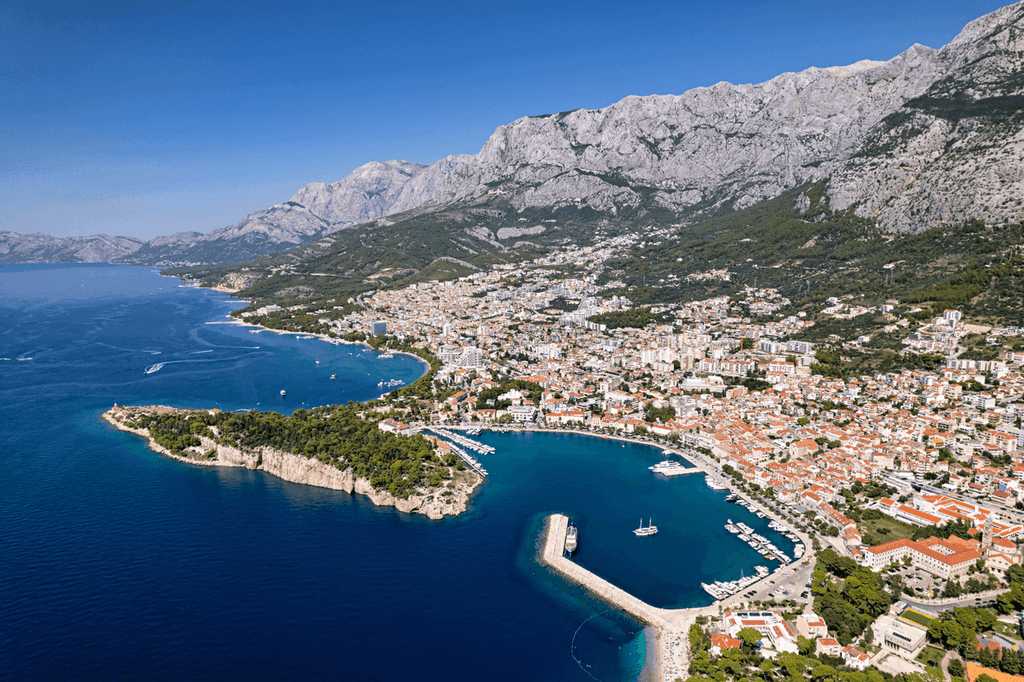
Brač is home to Zlatni Rat, the famous pebble beach near Bol whose tip shifts with the wind and currents. On the mainland, the Makarska Riviera runs beneath the Biokovo mountains, with long pebble beaches, small harbours and a relaxed, family-friendly atmosphere. Both are good choices if swimming matters more to you than sightseeing.
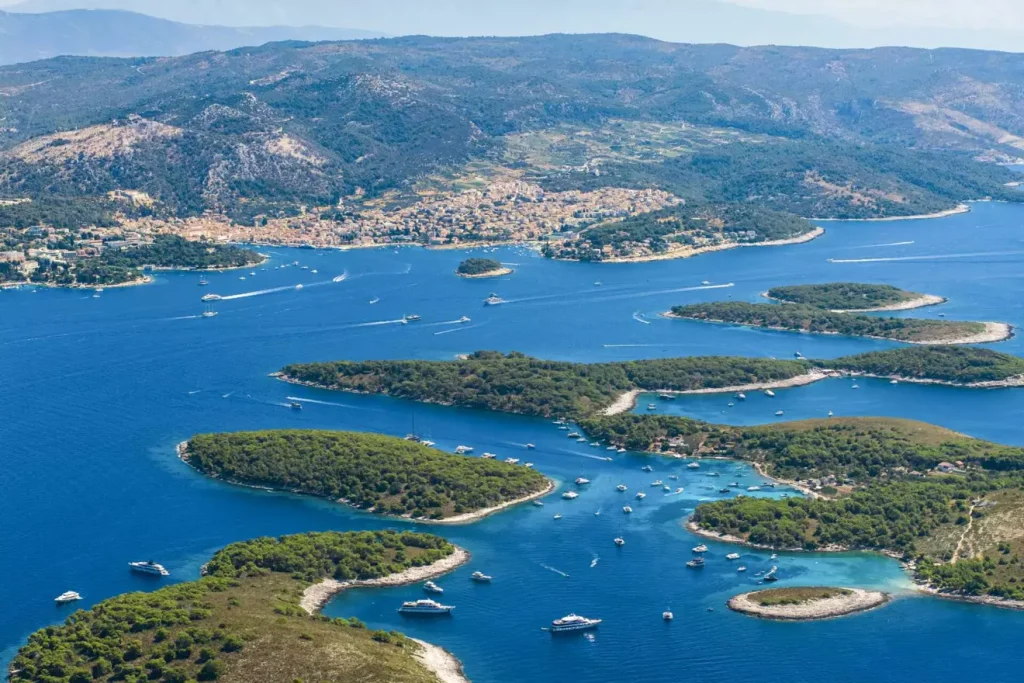
Korčula and Mljet: The Quiet Side of Dalmatia (2 to 3 days each)
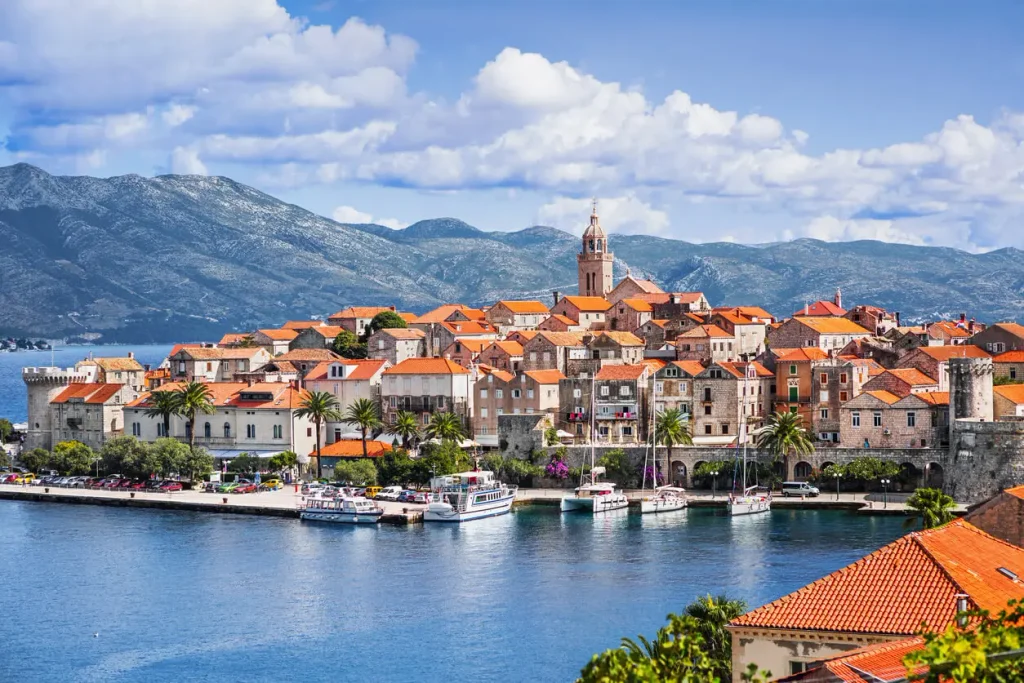
Korčula Town is a compact walled town on a small peninsula, often called Marco Polo’s birthplace, although that claim is disputed. The nearby Pelješac peninsula is Croatia’s best-known wine region and also the home of Ston, famous for its oysters and its long defensive walls.
Mljet is greener and calmer. Much of the island is a national park built around two saltwater lakes, and you can cycle or kayak around the water. If you want a break from crowds and nightlife, this is one of the best places in the country.
Inland Croatia: Lakes, Waterfalls and the Capital
Plitvice Lakes National Park (1 to 2 days)
Plitvice is a UNESCO World Heritage Site with 16 interconnected lakes, countless waterfalls and wooden boardwalks that take you right over the water. The turquoise, green and blue colours come from the minerals and algae in the water, and they change with light and season.
It is also Croatia’s most visited natural site, so a bit of planning matters:
- Book timed tickets online in advance, especially in summer, because entry is limited.
- Arrive at opening time or in the late afternoon for fewer crowds.
- Check prices before you budget. Ticket prices change sharply by season (roughly €10 in winter to around €40 in peak summer, with a cheaper late-afternoon entry), so confirm on the park’s official website.
- Allow 4 to 6 hours to walk the main routes and use the boat and shuttle inside the park.
Best time: April to June and September to October. In winter the park is quieter but some sections can be icy or closed.
Krka National Park (half to full day)
Krka is closer to Split and Šibenik and generally easier to fit into a coastal itinerary than Plitvice. It has a series of waterfalls, a wooden walkway and a small island monastery. Swimming at the main falls is no longer permitted, so treat it as a walking and photography stop rather than a swim.
If you can only choose one park, choose Plitvice for scale and drama and Krka for convenience.
Zagreb (1 to 2 days)
Zagreb is relaxed, walkable and good value. The Upper Town has old streets and viewpoints, the Dolac market is the best place for local food, and the museums include the quirky Museum of Broken Relationships. It also has the best international flight connections and is the easiest gateway to Plitvice, so it works well as the start or end of a trip.
Istria and Kvarner: Food, Wine and Roman Ruins
Rovinj (2 to 3 days)
Rovinj is a colourful harbour town built on a small peninsula, crowned by the bell tower of St Euphemia’s church. It is one of the most photogenic places in Croatia, and it is also an excellent base for the rest of Istria.
Inland Istria (2 to 3 days)
Hill towns such as Motovun and Grožnjan are known for truffles, olive oil, wine and quiet streets. Istria is the best choice if you care about food more than beaches, and it is easy to explore by car.
Pula (1 day)
Pula has one of the best-preserved Roman amphitheatres in the world, still used for concerts and events. It is an easy day trip from Rovinj.
Opatija and Kvarner (1 to 3 days)
Opatija is a Habsburg-era seaside resort with elegant villas and a long coastal promenade. The wider Kvarner region is a good “smarter” choice for travellers who want seafood, islands and good restaurants without the biggest summer crowds.
Zadar and Šibenik (1 to 2 days each)
Zadar has a Roman old town and two unusual modern attractions: the Sea Organ, which plays sound from the waves, and the Greeting to the Sun light installation. It is a good stop between Istria and Split. Šibenik’s UNESCO-listed St James Cathedral and its position near Krka make it an easy add-on.
Best Time to Visit Croatia
- April to May: Mild weather, green landscapes and fewer visitors. Good for cities, parks and driving. The sea is still cold.
- June: Warm days, long daylight, open ferries and lavender on Hvar. One of the best months overall.
- July and August: Hottest, busiest and most expensive. Book everything in advance and do major sights early or late in the day.
- September: Warm sea, thinner crowds and good prices. Many travellers consider this the best month for swimming and island trips.
- October: Quieter, with a good chance of nice weather for sightseeing. Some island services and restaurants start to close.
- November to March: Low season. Cities such as Zagreb and Split stay lively, but many island businesses shut and ferries run less often.
Sample Itineraries
7 Days: The Classic First Trip
- Days 1 to 3: Split. Diocletian’s Palace, Marjan Hill, and a day trip to Trogir or Krka.
- Day 4: Ferry to Hvar, then boat to the Pakleni Islands.
- Days 5 to 7: Dubrovnik. Walk the walls early, add a day trip to Cavtat or the Elaphiti Islands.
To include Plitvice, add two days at the start and base yourself in Zagreb and Plitvice before heading south.
10 Days: Coast, Islands and Lakes
- Days 1 to 2: Zagreb.
- Days 3 to 4: Plitvice Lakes, overnighting near the park.
- Days 5 to 7: Split and Hvar.
- Days 8 to 10: Dubrovnik, with a day on Korčula or Mljet.
10 Days: Food, Wine and Quiet Coast
- Days 1 to 4: Rovinj and inland Istria.
- Day 5: Pula and Opatija.
- Days 6 to 7: Zadar and Šibenik, with Krka.
- Days 8 to 10: Split, with a day trip to Trogir.
Practical Tips for 2026
- Money and borders: Croatia uses the euro and is part of the Schengen Area, so one Schengen visa covers it along with other member countries. Travellers from Bangladesh need a Schengen visa, so apply early and confirm current requirements with the embassy or official visa centre.
- Getting around: Buses connect major towns, and Jadrolinija and other operators run ferries to the islands. A rental car is useful in Istria and for national parks, but unnecessary in Dubrovnik and Split old towns.
- Ferries: Book car and passenger tickets early in July and August, and check timetables the day before because weather can change sailings.
- Booking early: Plitvice tickets, Hvar accommodation and Dubrovnik rooms sell out first in summer.
- Beach shoes: Many Croatian beaches are pebbly or rocky. Water shoes make swimming much easier.
- Rules change: Ticket prices, cruise-ship limits and ferry schedules can change each season. Check official websites before you pay.
Frequently Asked Questions
What are the must-see places in Croatia? For most first trips: Dubrovnik, Split, Plitvice Lakes and at least one island such as Hvar or Korčula.
How many days do I need in Croatia? Seven days covers a coastal trip, and ten days lets you add Plitvice and a second island.
Is Dubrovnik or Split better? Dubrovnik is more dramatic and more expensive, while Split is livelier and works better as a base. Many people visit both.
Plitvice or Krka? Plitvice is larger and more spectacular, but Krka is easier to combine with the coast.
Is Croatia expensive? Coastal prices peak in July and August. Inland areas, Zagreb and the shoulder seasons are cheaper.
Final Thoughts: Best Places to Visit in Croatia
The best way to enjoy Croatia in 2026 is to choose fewer places and give each one enough time. Combine one historic city, one island and one nature stop, travel in June or September if you can, and book the popular sights early. If you want help planning your route, tickets, hotels and transfers, Explore BD can build the trip around your dates and budget.